Moscow, Zelenograd
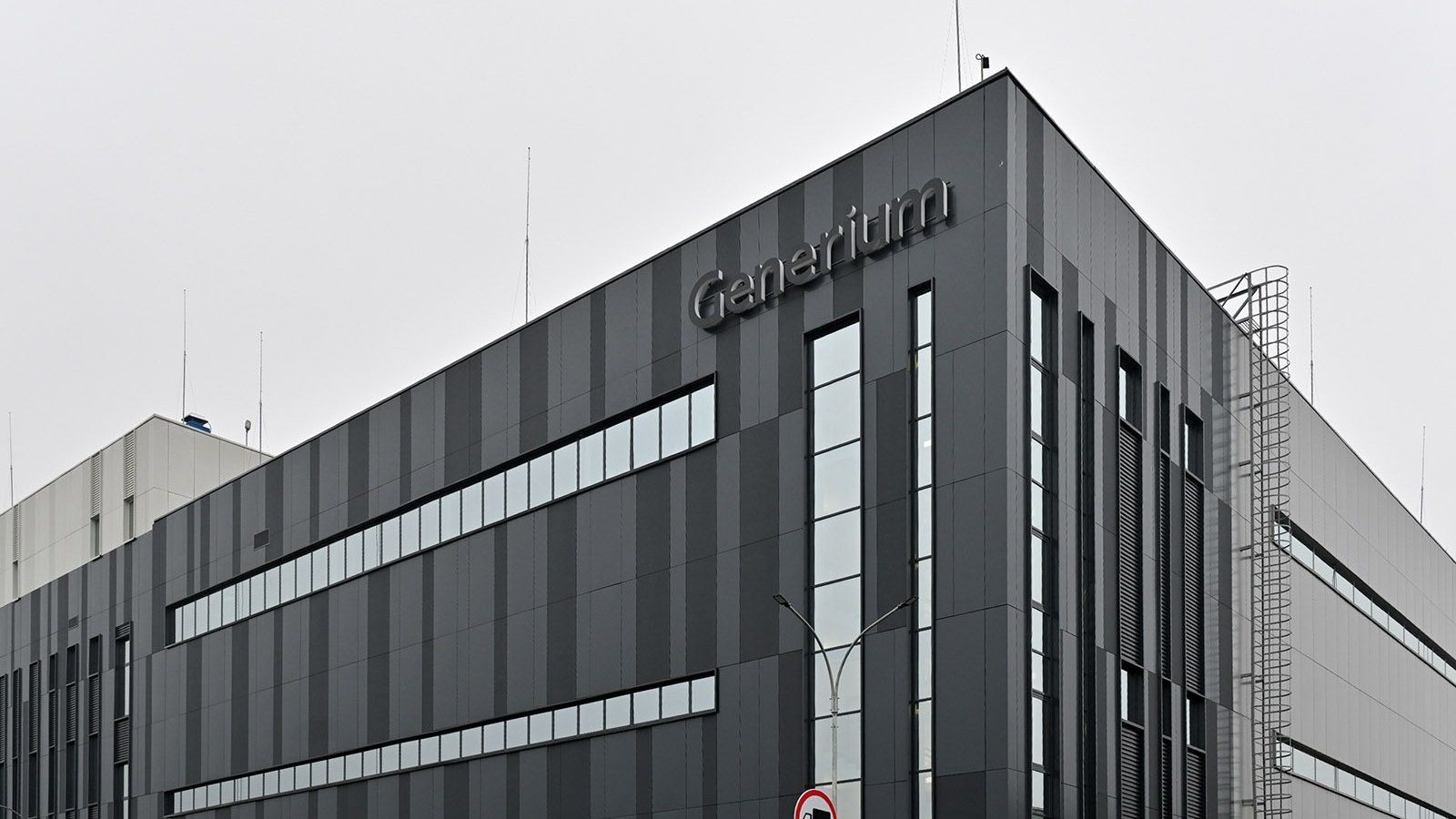
Generium-Next plant in Zelenograd
Ventilation automation at the Generium-Next pharmaceutical plant in Zelenograd, Moscow: 89 ventilation systems, 77 panels, 185 variable speed drives, 117 km of cable.
- Automation & BMS
The project in numbers
Based on the estimates of our contract
Generium-Next is a new pharmaceutical plant at the Alabushevo site of the Technopolis Moscow special economic zone in Zelenograd. It makes genetically engineered medicines for rare and socially significant diseases. Our team installed the automation for the general ventilation of the production blocks and for the air handling units of the cold rooms.
Our scope
- Automation of supply and exhaust systems in three production blocks.
- Automation of the cold room air handling units.
- Cable routes: trays, conduit and cable.
- Installation and connection of control panels and variable speed drives.
- Installation of sensors and damper and valve actuators.
- Preparing the systems for commissioning, and as-built documentation.
Systems
Control panels
77 ventilation automation and control panels and network cabinets, plus 29 small local enclosures.
Equipment: Siemens SIMATIC ET 200SP controllers, PROFINET network, SITOP power supplies
Variable speed drives
185 variable speed drives from 0.75 to 30 kW control the fans and are linked in a PROFINET network.
Equipment: GRANDRIVE PFD80 with PROFINET modules
Field devices
About 1,070 sensors and actuators: 338 differential pressure sensors, 302 temperature and humidity sensors, 252 air damper actuators, 78 valve actuators, 56 frost protection thermostats and 13 gas analysers.
Equipment: Siemens, Ridan, Analitpribor, Dwyer
Cable routes
About 117 km of control, power and communication cable, about 3.1 km of perforated cable trays and about 38 km of flexible conduit. Drops to equipment in clean areas run in stainless steel tubes with hygienic bends.
Equipment: halogen-free and fire-resistant ng(A)-HF and ng(A)-FRHF cables, AISI 304 stainless steel
How the work went
- Routes. We installed trays and conduit and pulled more than 117 km of cable to the cable schedules of the working documentation.
- Panels and drives. We installed and connected 77 control panels and 185 variable speed drives.
- The plant's senses. We installed more than 1,000 sensors, damper and valve actuators and impulse lines, which is how the automation "feels" the air in the clean rooms.
- Handover for commissioning. We terminated the systems, prepared the as-built documentation and handed the systems over for commissioning.
What made the project special
- Pharmaceutical production. Clean rooms need precise control of pressure differentials: 277 low differential pressure sensors and about 6.6 km of impulse lines alone.
- Explosion protection. Some rooms have explosion-proof sensors and analysers for oxygen, carbon dioxide and hydrogen chloride.
- A large crew. On peak days up to 26 people worked on site.
- Working alongside others. Installation ran in parallel with other contractors, under site permits and strict health and safety rules.
Interesting facts
- The plant opened in October 2025, on Moscow Industry Day.
- It covers 28,100 m² and has created 250 jobs.
- Its capacity is up to 5.4 million vials a year.
- It is the ninth production facility in the pharmaceutical cluster of the Technopolis Moscow special economic zone.
Photos: Maxim Mishin, Press Service of the Mayor and Government of Moscow / mos.ru, CC BY 4.0